0808 189 1246
 info@miatlantic.com
 out of 5



Intel Processors
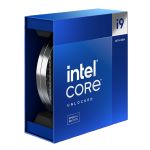 IN STOCKIntel Core i9-14900KS processor 36 MB Smart Cache Box
Brand: Intel SKU: BX8071514900KS Condition: NEW £595,55 | £714,66(Inc.VAT) IN STOCKIntel Xeon 4210 processor 2.2 GHz 13.75 MB
Brand: Intel SKU: CD8069503956302 Condition: NEW £592,68 | £711,22(Inc.VAT) IN STOCKIntel Xeon Processor E52630LV3 1.8GHz (Haswell)
Brand: Intel SKU: P4X-E52630LV3-SR209 Condition: NEW £586,36 | £703,63(Inc.VAT) IN STOCKIntel Xeon Processor E5-2430 2.2GHz (Sandy Bridge)
Brand: Intel SKU: P4X-E52430-SR0LM Condition: NEW £584,67 | £701,60(Inc.VAT)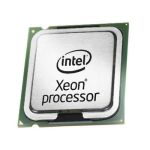 IN STOCKIntel Xeon X3480 3.06GHz (Lynnfield)
Brand: Intel SKU: P4X-UPX3480-306-8M Condition: NEW £528,19 | £633,83(Inc.VAT) IN STOCKIntel Xeon Processor E5-2630 2.3GHz (Sandy Bridge)
Brand: Intel SKU: P4X-E52630-230-15M Condition: NEW £528,19 | £633,83(Inc.VAT) IN STOCKIntel Xeon 4210R processor 2.4 GHz 13.75 MB Box
Brand: Intel SKU: BX806954210R Condition: NEW £527,40 | £632,88(Inc.VAT) IN STOCKIntel Xeon Silver 4310 processor 2.1 GHz 18 MB
Brand: Intel SKU: CD8068904657901 Condition: NEW £526,32 | £631,58(Inc.VAT) IN STOCKIntel Core Ultra 9 285K processor 36 MB Smart Cache Tray
Brand: Intel SKU: AT8076806419 Condition: NEW £526,08 | £631,30(Inc.VAT) IN STOCKIntel Core i7-3930K 3.2GHz (Sandy Bridge)
Brand: Supermicro SKU: P4D-I73930K-320-12M Condition: NEW £508,84 | £610,61(Inc.VAT) IN STOCKIntel Xeon W-2245 processor 3.9 GHz 16.5 MB
Brand: Intel SKU: CD8069504393801 Condition: NEW £507,78 | £609,34(Inc.VAT) IN STOCKIntel Xeon Gold 6130 Processor 22M Cache 2.10 GHz
Brand: Intel SKU: SR3B9B Condition: NEW £499,67 | £599,60(Inc.VAT)
Intel Processors Comprehensive Buying Guide for UK Users
Since the launch of the first commercial CPU back in 1971, Intel has been dominating the processor market on the back of innovation and a wide range of products. With 78 % of the processor market, Intel has absolute dominance of the market, comprehensively defeating the rival manufacturers such as AMD and Apple that have 13% and 6% market shares, respectively.
Most of the world’s popular laptop and PC brands, including HP, Lenovo, Dell, ASUS, Acer, Samsung, LG, Microsoft, to name a few, choose Intel processors due to their strong performance, broad compatibility, and energy efficiency. Laptops, desktops, workstations, and servers powered by Intel processors are ranked highly for various uses such as personal use, immersive gaming, content creation, IoT, artificial intelligence, and more.
Having said that, Intel Core processors come in a wide range of model numbers, generations, and names, which makes it challenging for people to choose the right CPU cores for their needs. In this write-up, we are going to discuss in-depth Intel Core CPUs UK variants so that you can select the CPU that can exceed your performance, energy efficiency, and processing needs.
We start with the basics: understanding the Intel cores and generations.
Understanding Intel Core 3(Core i3), Core 5(Core i5), Core 7(Core i7), and Core i9:
Intel Core Processors are the flagship CPU series of Intel, optimized for gaming, content creation, productivity, and immersive visual experience.
-
Intel Core 3 UK:
Intel has rebranded Core i3, Core i5, and Core i7 with Intel Core 3, Core 5, and Core 7. Intel Core 3 is for entry-level users, suitable for basic computing tasks, web browsing, and office applications. They come with up to 4 performance cores, up to 12 threads, up to 4.7 GHz max turbo frequency, and up to 12 Mb cache memory to support your basic computing needs. Intel Core 3 laptops are normally paired with 4 GB or 8GB of memory.
-
Intel® Core™ 3 processor 100U 10M Cache, up to 4.70 GHz
-
Intel® Core™ 3 processor 100U 10M Cache, up to 4.70 GHz, with IPU
-
Intel® Core™ 3 processor 100U 10M Cache, up to 4.70 GHz, with IPU
-
Intel® Core™ 3 processor 100HL 12M Cache, up to 4.60 GHz
-
Intel® Core™ 3 Processor 201TE 12M Cache, up to 4.60 GHz
-
Intel® Core™ 3 Processor 201E 12M Cache, up to 4.80 GHz
-
Intel® Core™ 3 Processor 201EF 12M Cache, up to 4.80 GHz
-
Intel Core 5 UK:
These Intel CPUs are designed for mainstream users and casual gamers. Intel Core 5 laptops or PCs are suitable for multitasking, light content creation, and moderate gaming. They come with 8 to 14 cores (13th gen), 12MB to 24MB cache, up to 4.9 GHz max turbo frequency, and more.
These Intel CPUs are mostly deployed in desktops, offering a balance of affordability and performance.
Some of the Intel Core 5 UK models are listed here.
-
Intel® Core™ 5 Processor 221TE (24M Cache, up to 5.00 GHz)
-
Intel® Core™ 5 Processor 221E (24M Cache, up to 5.20 GHz)
-
Intel® Core™ 5 processor 220U (12M Cache, up to 5.00 GHz)
-
Intel® Core™ 5 processor 220H (18M Cache, up to 4.90 GHz)
-
Intel® Core™ 5 Processor 211TE (20M Cache, up to 4.80 GHz)
-
Intel® Core™ 5 Processor 211EF (20M Cache, up to 4.90 GHz)
-
Intel® Core™ 5 processor 120UL (12M Cache, up to 4.60 GHz)
-
Intel® Core™ 5 Processor 120 (18M Cache, up to 4.50 GHz)
-
Intel® Core™ 5 processor 120U (12M Cache, up to 5.00 GHz)
-
Intel Core 7 UK:
These Intel CPUs are designed for power users, content creators, and serious gamers who need to engage in processor-heavy tasks, including video editing, 3D modeling, and high-end gaming. They come with up to 36 MB cache, up to 5.6 GHz max Turbo frequency, and up to 24 cores.
Some models under this family are listed below:
-
Intel® Core™ 7 Processor 251E (36M Cache, up to 5.60 GHz)
-
Intel® Core™ 7 processor 250U (12M Cache, up to 5.40 GHz)
-
Intel® Core™ 7 processor 250H (24M Cache, up to 5.40 GHz)
-
Intel® Core™ 7 processor 240H (24M Cache, up to 5.20 GHz)
-
Intel® Core™ 7 processor 150U (12M Cache, up to 5.40 GHz)
-
Intel Core i9 UK:
These are premium Intel CPUs designed for enthusiasts and professional content creators who engage in Heavy multitasking, professional-grade content creation, and top-tier gaming. Intel Core i9 laptops come with 14 to 24 cores (13th gen), 24MB to 36MB cache, and 5.8 max Turbo frequency.
-
Intel® Core™ 9 processor 270H (24M Cache, up to 5.80 GHz)
Intel Processor Generations: What’s New in 2025:
Intel is known for regular releases of new generations of processors, delivering enhanced performance, improved energy efficiency, and higher clock speed.
Here are some notable Intel generations that you need to know.
-
13th Generation (Raptor Lake):
This generation was released in 2022, and it comes with cutting-edge technologies like PCIe 5.0 and DDR5 memory, offering significantly enhanced performance for users.
-
12th Generation (Alder Lake):
Supporting a significant architectural shift with a hybrid design combining performance and efficiency cores, this Intel Gen is capable of meeting your needs effectively.
-
11th Generation (Rocket Lake for desktop, Tiger Lake for mobile):
These processors were launched in 2020-21, and they feature significantly enhanced AI performance and integrated graphics.
Decoding Intel Processor Suffixes:
Intel adds multiple suffixes in the processor names, indicating some vital information that you must know to make the right decision regarding the best-suited Intel processor for your needs.
K: Unlocked for overclocking
F: No integrated graphics
H: High-performance mobile processor
U: Ultra-low power (typically for laptops)
G: Includes Intel’s high-performance integrated graphics
T: Power-optimized for desktop PCs
S: Special edition or performance-optimized
Now that we have discussed in-depth the basics of Intel processors, it is pertinent here to help you know some factors that you should keep in mind while purchasing Intel CPUs online in the UK.
How to Choose the Right Intel Core Processor in 2025:
Here are the key factors that you need to know.
-
Microarchitecture:
Similar to every tech product, the design and internal blueprint of processors must be known and understood fully. The differences in architecture influence the speed and performance of CPUs. But how can you know about the microarchitecture that comes with your intended CPU? The right answer is looking at the model name of the processor.
For instance, Intel Core i9-14900K is a high-end processor that comes with a coding scheme. Let’s decode it.
-
The 14 in the model’s name indicates the generation, which is the 14th Gen Raptor Lake Refresh processor. Other generations are 13 = 13th Gen "Raptor Lake", 12 = 12th Gen "Alder Lake”, 11 = 11th Gen "Rocket Lake”, and 10 = 10th Gen "Comet Lake."
-
Core i9 is already explained above; you can consult the relevant sections above.
-
The next 00 are showing sub-product tier placement.
-
K is showing the high-end variant of the CPU, indicating higher overclocking speed. You may encounter other letters, such as F shows that the CPU has no integrated graphics cards, and KF, which shows that the CPU has no integrated GPU and supports higher overclocking speeds.
It should be noted that Intel has changed its naming scheme in the new "Arrow Lake" desktop processors. In this family, the traditional Core i9, Core i7, and Core i5 have been replaced with Core Ultra 9, Core Ultra 7, and Core Ultra 5.
Here is an example to help you decode the new numbering schemes of Intel.
Intel Core Ultra 9 285K chip
-
2 in this scheme shows the generation number. Intel has associated 2 with Intel's Arrow Lake processors.
-
8 indicates the relative performance. The higher the number, the higher the performance. In this regard, all Ultra 9 CPUs come with 8, Ultra 7 processors come with 7, and Ultra 5 CPUs can be ranked as "4," "3," or "2".
-
The 5 number does not have any significant meaning.
-
Finally, K and other letters show the performance and other characteristics. Similar to earlier number schemes, K denotes support for higher overclocking speed, F shows the absence of integrated graphics cards, and KF indicates both aspects. T indicates that models carrying T suffixes are designed for energy efficiency and lower heat output.
-
Intel Core Count:
You can take cores as an individual processor, capable of performing specific tasks. With each extra core, you can experience added capability of your CPU to perform multitasking, as each is responsible for performing a specific task.
Nowadays, multi-core processors are the norm because modern software and programs are developed to take advantage of the multi-core performance of CPUs. The cores can be as high as 64 and as low as 2, providing you with a large variety of options to meet your specific processing needs.
Normally, all CPU cores are the same. However, with the launch of Intel's 12th Gen Alder Lake processors, Intel now employs two types of cores in its CPUs.
-
P-Cores are developed on high-performing microarchitectures that are suitable for high-end tasks.
-
E-Cores indicate that microarchitectures are designed to optimize power efficiency and compact form factor.
How many cores do you need?
-
Dual-Core or 2-core CPUs are recommended for streaming video, email, web browsing, and work processing.
-
Quad-Core or 4-core CPUs offer better performance, and they are suitable for multi-threaded applications such as light gaming, basic photo and video editing, and multitasking with everyday gaming.
-
6-8 core central processing units are recommended for competitive gaming, 3D rendering, professional editing, and running virtual machines. Intel 6-8 CPUs are more suitable for single-threaded applications such as gaming, whereas AMD CPUs are suggested for multi-threaded applications.
-
10 + Core CPUs are high-end processors recommended only for professional 3D rendering, scientific simulation, running several virtual machines, high-end gaming, and streaming.
-
Multi-Threading:
Similar to cores, the number of threads also influences the performance of Central Processing Units. The number of Threads shows the tasks that a core can perform. Modern CPUs come with more threats than the number of cores, implying that cores are capable of performing more than one task at a time.
In short, multi-threading or hyperthreading enables cores of CPUs to perform two lines of execution at a time, improving the performance of the CPUs. Therefore, it is good to have a CPU with a higher number of threads.
The Best Intel CPUs that You Can Buy in the UK:
Here are our top picks when it comes to the best Intel processors in the United Kingdom.
-
Best Gaming Intel GPU:
Intel Core i7-14700K is one of the best Intel processors suitable for an immersive and smooth gaming experience. Featuring 20 cores, 28 threads, 3.4 GHz base clock frequency, 5.5 GHz maximum boost clock speed, 33 MB L3 Cache Amount, Intel UHD Graphics 770, and more, this Intel Core i7 processor can help you enjoy a competitive edge in gaming.
-
Best Intel GPU Overall:
Intel Core Ultra 9 285K supports 24 Cores, 24 Threads, 5.7GHz Boost Clock speed, 3.7GHz P-cores/3.2GHz E-cores Base Clock Speed, 36 MB L3 Cache, 125W base/250W max TDP. Intel Core Ultra 9 285K is often dubbed as the best Intel CPU for pairing up other PC components for the citizens of the UK and beyond.
-
Best Budget Intel GPU:
Intel Core i5-12600K is ranked as the best budget Intel processor that comes with CPU performance punches above its station in bench testing, reasonable price-per-core, and high overclock ceiling.
It comes with 10 cores, 16 threads, 3.7 GHz Base Clock Frequency, 4.9 GHz Maximum Boost Clock, 12 MB L3 Cache Amount, Intel UHD Graphics 770, and more.
Wrapping Up:
Intel has always maintained a clear edge over its arch competitors, such as AMD, when it comes to top-quality and feature-packed central processing units. It offers a wide range of CPUs, varying in specs, so that users can find the best solution to meet their needs.
Therefore, you need to give serious consideration to core count, threads, Turbo speed, cache memory, and other specs so that you can choose the best option. In this article, we have discussed comprehensive Intel Core CPUs. We do hope that you can now make a well-informed decision. Big thanks for your reading.
Shopping Options